The none posting was a time for me to sit and reflect. Imagine having a cold feet since 2021, every time it comes to mind, I will tell myself I will soon start or I will claim being busy with work and school.
I have purchased several ring lights, tripod stands if I set up, I will tell myself my face is not apt. That is how from 2021 we have reached 2026.
For transformative videos do subscribe to our channel on YouTube
I remember December with my niece, I was telling her how I need to set up a community where we discussed word, finance, singles, married, purposeful living, parenting…
I did not know how to go about this big vision that needs to start small.
This is a reality, a lot of us deal with even me. I just realized the implementation should start whether you make mistakes or not.
Just take the bold steps, move one, two and before you know it, it will become your natural habitat.
Keep the passion burning, meet people who have been doing it, dare to make the mistakes like me, laugh at me till I get it right.
I know very soon with dedication and taking small steps, the applaud will follow.
Encourage yourself, it is not an easy road, I know. It’s the truth, you lie not, remember the journey of a thousand miles begins with a step. Let’s take the steps together; one, two, three, four…
We are making progress, this brings joy especially when you look back to see how far you have come.
It’s difficult don’t quit Keep pressing Fail forward – This was part of my story Tell yourself – I am on my way to a place call there.
With Jesus and determination I will get there The bright future has no option but to unveil No turning back No giving up I see the future from where I stand Making progress is what I have to keep doing.
Yes it’s not Palatable but sooner than you least expect, plates will be on the banquet table celebrating you and I for taking the first step to success.
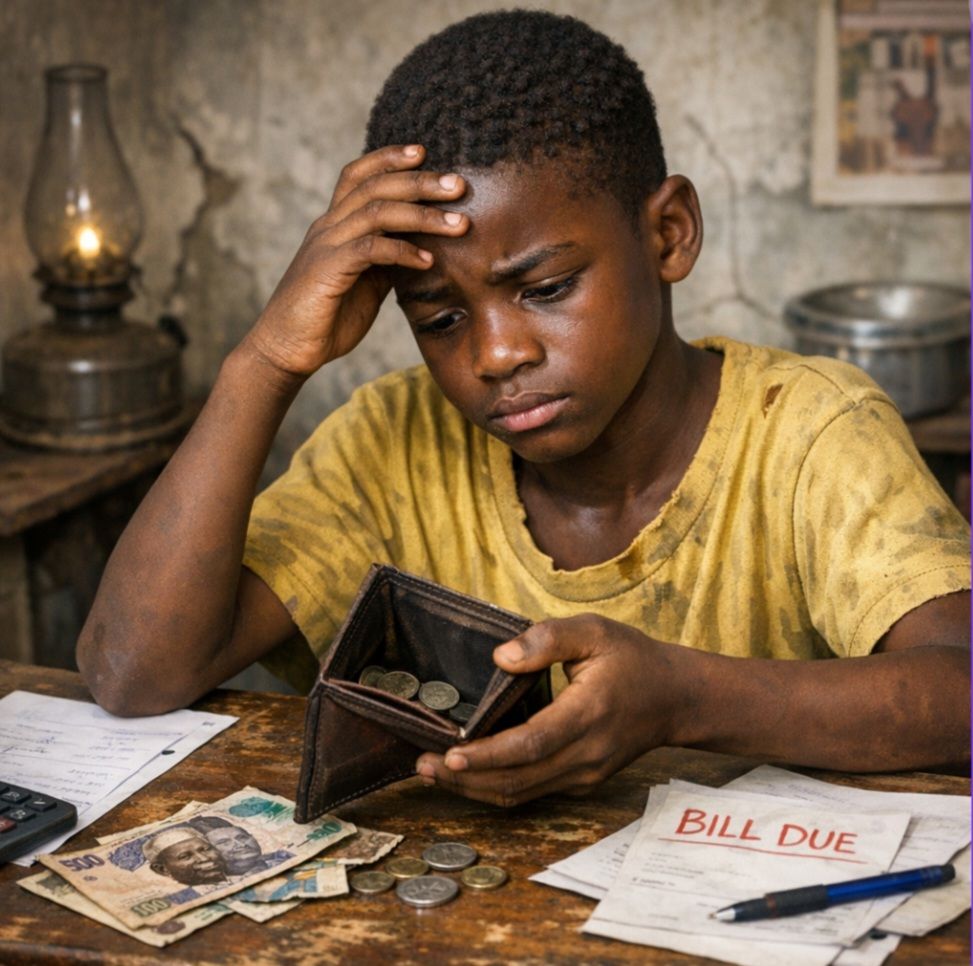
This write-up is motivated by a story of a young lad struggling with his finances.
He is currently struggling with growing up season.
He feels the expectation from everyone is enormous.
Setting up his priority goals, keeps knocking at the door.
His supposed dependency on his parents is not welcomed because to them, he is mature and should take on the responsibility of his life and finances.
Even scripture speaks of times and seasons, but most times, we lack understanding of when to adjust to new seasons.
Yes, springtime and harvest, sowing and reaping cannot be erased from man’s existence, but who instructs you?
To what extent do you eat the seeds?
And to what extent do you reserve or leave for the next planting season?
How do you determine that it will be sufficient to yield a bountiful harvest?
This is not just a teen-to-youth problem, it affects the adults too.
The Nigerian reality, your parents have struggled to pay your fees through school, you are presently serving your country and some stipends are paid into your account, how do you balance the accounting books?
How well do you balance the books to ensure you don’t borrow or get stranded?
As an employee, the job only pays income, man’s insatiable desires are innumerable
What falls into want and who determines the needs in today’s modern world, where digital banking and instant withdraw is not an issue, unlike before, you would consider the strength to walk into the banking hall.
Instant gratification is easier to satisfy now than before.
How do I tackle this issue?
Financial management is now on your front burner (Financial matter have become an immediate and high priority. if we observe closely, we will notice that many people yield income, but lack the wisdom necessary to manage it.
While brainstorming, I got a better picture of the farming cycles relative to seed time and harvest.
A good farmer never consumes its entire harvest.
Guess what? he saves the best seed for the next planting season.
How much is your income?
What is the best part to be saved?
Remember, if you eat the entire harvest, you will lack what to plant in the next planting season, which means no yield during the harvest season.
Don’t spend your entire stipend, no matter how little that income is. Leave a good amount aside, as savings a lesson drawn from the farmers’ story.
Not all grain is for eating or consumption. A successful farmer distinguishes his harvest; he separates them into two categories: the bread and the seed.
The bread is the portion for consumption, while the seed is reserved for the next planting season. Like the farmer, it lies in your power to determine the portion of the finances to be saved and the portion to be consumed.
Taking this route can be very demanding, but the truth is, it does not leave you hard and dry. There is always a fallback to.
This brings us to the notion of the seeds kept and planted in the planting season is what yields the future harvest. Thus, spending your entire stipend or income denies you funds to tackle future problems.
I remember my father growing up, he always had emergency funds, he had trusted friends who we came to realize that these trusted friends was his saving. When a need arose, he would borrow from himself and tell us he borrowed from his friends.
Be your trusted friend who bails you out from every financial burden by leaving sufficient funds for the rainy day.
I love his principle, and I yearn to be like him. It starts by saving a portion monthly, which grew over time.
My dad understood the principles of the corn seed, he saved it and planted it during the planting season, he did as occasion served him, denying the pleasures of life for a season. He nurtured the stalks, and at last, the harvest was enormous.
Apply the corn seed principles. Always set aside money as savings. I know you will never regret it.
Seeds have great potential, so does saving a portion of your stipends and or income. Remembering a seed eaten is a forest denied. A corn seed, when planted, yields multiple harvests.
Seed keeping to yield a harvest can be likened to short-term or long-term financial planning depending on your goals.
You can start from the piggy bank we all used as children but your watchword must be DISCIPLINE.
You can grow into the local traditional savings culture we have in Nigeria called osusu, you can further stretch out by joining a cooperative society before advancing to buying shares, stocks or treasury bills.
Wherever you are or find yourself, start from the level that is convenient for you and gradually grow to your destination, which only you have the power to determine.
In every sphere of life; career, leadership, ministry, relationships, and even simple daily interactions there are people who carry something beyond natural ability. Their progress defies logic. Their results exceed effort. Their doors open without struggle. Their battles end before they begin. These are people who walk under what many call grace—a divine enablement that makes impossibilities bow and mountains shift.
To fight such a person is to engage in a battle you are already destined to lose.
Grace is not talent. It is not intelligence. It is not wealth or influence. Grace is that invisible force that amplifies one’s voice, prospers one’s steps, and shields one’s destiny. When a man walks in grace, his mistakes are covered, his inadequacies are compensated for, and his path is mysteriously cleared. His victories are not merely the result of strategy; they are the outcome of divine backing.
Why You Should Not Fight a Man With Grace
1. Grace Is a Backing You Cannot See
You may see only the human being, but you do not see the hand behind him. To challenge a man carried by grace is to challenge the force carrying him. Many people have fought individuals, unaware that they were wrestling with something greater than human strength.
2. Grace Makes Setbacks Irrelevant
A man with grace may fall, but he does not stay down. His rising is inevitable. Opponents waste energy attacking him, only to watch him emerge stronger. Fighting a man who cannot stay defeated is a futile battle.
3. Grace Turns Attacks Into Promotion
When a graced person is pushed, he rises. When he is opposed, he accelerates. What was intended for his downfall becomes the very catalyst for his advancement. Those who fight him unknowingly push him into new realms of visibility and victory.
4. Fighting Grace Brings Unnecessary Trouble
History and personal experience show that fighting someone who carries grace often leads to self-inflicted wounds. People lose peace, opportunities, and even relationships because they positioned themselves against the wrong person.
What You Should Do Instead
1. Recognize Grace When You See It
Humility allows you to discern it. Envy blinds you to it. Instead of asking, “Why him?” ask, “What can I learn from him?”
2. Honour Grace
Honour attracts. Dishonour repels. When you honour people who carry grace, you create room for that same grace to speak for you.
3. Protect Your Heart
Comparison, jealousy, and resentment are traps. Guard your heart from competing with people who are not even fighting you.
4. Focus on Your Own Path
Every person has a measure of grace. Yours may be different, but it is still powerful. Competing with someone else blinds you to the unique path God has crafted for you.
The Wisdom in Restraint
Sometimes silence is wiser than confrontation. Sometimes stepping aside is stronger than fighting. Sometimes honouring grace is more profitable than proving a point. When you understand how grace works, you stop engaging in battles that do not concern your destiny.
Grace is not always loud, but its results are undeniable. When you see a man or woman rising inexplicably—facing giants and winning with ease—be wise. Do not fight such a person. Instead, align yourself with grace. Celebrate it. Learn from it. Honour it. Because what you honour, you attract.
In life, the strongest people are not those who fight the hardest but those who understand the battles worth fighting and the ones to walk away from.
Do not fight the man with grace. You cannot win. But you can learn, grow, and even rise with him.
As children of God, we were created to reign in life. The Bible says in Genesis 1:28 that God blessed us and said, “Be fruitful, multiply, fill the earth, and subdue it. Have dominion over the fish of the sea, over the birds of the air, and over every living thing that moves on the earth.”
This mandate is not just a distant memory but a present reality. We were made for dominion. We were created to rule, to reign, and to have authority over the earth. But what does this mean in practical terms?
It means we were made to live a life of purpose, a life that makes a difference. We were made to solve problems, to innovate, and to create. We were made to lead, to inspire, and to empower others.
But our dominion is not just about what we do; it’s also about who we are. We are children of the Most High God, and our identity is rooted in Him. We are sons and daughters of the King, and our inheritance is the kingdom of God.
As we embrace our identity and our purpose, we will begin to see the world around us change. We will see darkness pushed back by the light of God’s presence in us. We will see hope restored, and we will see lives transformed.
So let us rise up and take our place as sons and daughters of the Most High God. Let us embrace our dominion and rule with grace, humility, and wisdom. Let us be the light of the world, shining brightly for all to see.
My name is Tina, and for years I thought I knew what success meant. I thought it was being comfortable and my ability to do things with ease, but I was very wrong.
I was born to a respected engineer and a business woman, I grew up in comfort. I had quality education from kindergarten to my first degree and a family that believed in my future — my life was a checklist of privilege.
When I graduated I joined one of Nigeria’s most prestigious firms, everyone congratulated me. I was living the dream. But how true was this dream without purpose?
Yet every time I walked past a crowded magistrate’s court or heard stories of people languishing in detention without legal help, a quiet question nagged me: Is this all there is? How can I make a change?
That question became louder one rainy afternoon. I was at court filing documents for a big commercial case when I saw a frightened teenage girl at the clerk’s desk. She had been arrested for hawking without a permit. She had no lawyer, no money for bail, and no one to speak for her. Watching her, I felt something shift inside me.
That night I couldn’t sleep. I opened my jotter and wrote at the top of the page: “Privilege to Purpose.” Underneath, I listed the skills, contacts, and resources I had and how I could use them for people like that girl.
A few months later, I took a leap of faith and founded Tinaris Legal Clinic. It started as a small pro bono desk with just me and two volunteers. We focused on indigent inmates, women, who had been left behind by the justice system. We negotiated bail, challenged unlawful detentions, and ran “Know Your Rights” outreaches.
It wasn’t easy. I gave up many evenings and weekends, lost weight from stress, and endured people calling me “too idealistic.” But with every released inmate or detainee from unlawful detention, every widow who got her property back, every young man who finally had legal representation, I felt something I had never felt in the corporate world — deep, sustaining purpose.
Today, Tinaris Legal Clinic has grown into a network of volunteer lawyers and advocates across the state. We’re still small, but our impact runs deep. When I speak at conferences or meet young lawyers, I tell them:
“Privilege is not the destination — it’s the platform. Every skill, connection, and advantage you possess is a tool. The question is: what are you building with it?”
Looking back, I see the girl I once was ambitious, eager, and searching for meaning. I smile knowing I’ve finally aligned my life and my work. My journey from privilege to purpose isn’t finished, but it’s the most meaningful case I’ll ever take on.
Mrs. Josephine Alvary, a retired school principal, and Mr. Macpherson Josiah, a retired civil servant and widower, had something in common. They had both spent their lives building legacies—not just in their careers, but for their families. With age came wisdom… and a growing concern. Both had heard stories—painful, heartbreaking stories—of families torn apart by disputes over inheritance, especially when there was no clear plan in place. They had seen how customary law, especially in some communities, could override a person’s true wishes. Daughters excluded. Widows chased out. Assets scattered. “I don’t want my children to fight after I’m gone,” Mrs. Alvary said to Mr. Josiah over tea one Sunday afternoon. “And I don’t want my nephews laying claim to the house I built from scratch just because I have no male child,” Mr. Josiah added, his eyes heavy with memory. So together, they sought help. They walked into Tinaris Legal Clinic, a place they had heard about at a church seminar. Warmly received by a team of professionals, they were given a free consultation. Their fears were not dismissed; they were understood. The lawyer on duty took time to explain the two main legal tools available for planning their estate: the Will and the Trust.
“Yes, a Will allows you to say who gets what,” the lawyer said, “but it becomes active only after death and must go through probate. And in many parts of Nigeria, Wills are still challenged by family members based on customary law. That’s where a Trust gives you an edge.” With a Trust, they learned: • They could begin managing their estate now. • They could set conditions—like funding education, or providing healthcare—for specific beneficiaries. • Their instructions would remain private and protected, not exposed to community interference. • Most importantly, their estate wouldn’t be forced through prolonged court processes or overridden by custom. “I wish I had known this earlier,” Mrs. Alvary whispered. “Now I see why families fall apart.” Mr. Josiah, relieved, said: “This is the peace of mind I was praying for. I will decide who takes care of my niece with special needs, not leave it to assumptions.” By the end of the meeting, they both agreed: a Trust was the more relevant option for them. It gave them what a Will could not—control beyond the grave, protection from customary impositions, and a guarantee that their loved ones would be cared for exactly as they intended. They each appointed Tinaris Legal Clinic as professional Trustees—neutral, reliable, and committed to justice. Plan wisely. Protect your family. Preserve your legacy.
Sixteen years ago, I embarked on a journey that would transform my life and the world of law practice forever. With determination and a humble start, I would jumped on a bike being the fastest means of transportation where I reside to meet up the courts time which is 9am, the wind in my hair, and the thrill of the unknown ahead of me. Each ride to the courthouse was a blend of excitement and anxiety; I was a young lawyer, eager to make my mark.
In those early days, my arsenal consisted of clunky volumes of legal reports and case law, spread across tables and desks. Every legal brief I crafted involved flipping through stacks of paper, making meticulous notes, and cross-referencing information from various sources. Research was labor-intensive, requiring hours of sifting through countless tomes to find the relevant precedents. Yet, it was all part of the journey, shaping my understanding of the law and my passion for justice.
Fast forward to today, and what a remarkable evolution it has been! The arrival of technology has revolutionized our practice. While we still maintain a brick-and-mortar office, it’s become just one facet of our operations. The advancement into a digital realm means that geographical boundaries are no longer a barrier. We now operate a borderless office, linking clients and colleagues from all corners of the globe seamlessly.
Our practice has embraced virtual setups in the courtroom, a shift that has made legal processes more accessible and efficient. Attorneys from different jurisdictions can now connect and collaborate without the restrictions of travel or location. This is especially beneficial for those who need assistance navigating complex legal landscapes. With just a click, we can engage in virtual hearings, allowing clients to participate from the comfort of their homes.
The integration of technology has not only accelerated our processes but has improved our accuracy and efficiency. Document management systems and legal databases now allow us to access information at lightning speed, bringing the knowledge of countless volumes right to our fingertips. Research that once took days can now be completed in moments, freeing up time to focus on what truly matters—our clients and their needs.
Today, as I reflect on the journey from riding bike to court with a bag full of papers to managing a hybrid practice, I feel a profound sense of gratitude. This evolution has been made possible not just by technological advancements but by the resilience and adaptability of our team. Together, we have embraced the digital future while cherishing the lessons of our past.
As I look towards tomorrow, the possibilities are endless. We stand ready to continue evolving, leveraging technology to deliver better service and uphold justice in a way that is faster, more efficient, and more inclusive than ever before. The commitment remains the same: to serve with integrity, compassion, and an unwavering dedication to our clients.
The flickering neon sign of the “Lucky Dime” cast a lurid glow on fifteen-year-old Caleb’s face as he leaned against the graffiti-scarred wall. His eyes, usually bright with youthful curiosity, were now shadowed with a hardened cynicism that belied his age. Tonight’s score had been small – a few phones snatched from distracted market-goers. Enough for his fix, maybe a little extra for the gang leader, “Blade.”
Caleb remembered a different life, a life filled with the scent of incense and the rhythmic cadence of hymns. His grandmother, Mama Sarah, a woman whose hands were as calloused from work as they were gentle in prayer, had filled his childhood with stories from the Good Book. He could still hear her voice, raspy but firm, reciting Proverbs 1:10: “My son, if sinners entice you, do not give in to them.“
But the whispers of the street had been louder, more immediate than Mama Sarah’s gentle warnings. The allure of belonging, the false sense of power that came with Blade’s crew, had choked out the seeds of faith she had planted. Now, the Bible lay dusty and forgotten under his bed, its wisdom a distant echo. His friend, fifteen-year-old Chidi, shuffled beside him, his gaze fixed on the bustling street. Chidi, whose laughter used to fill the church youth group, now carried a perpetual air of unease. Their descent had been gradual, a series of small compromises fueled by boredom, desperation, and the intoxicating pull of acceptance.”Blade wants us at the warehouse,” Chidi mumbled, kicking a loose stone.
As they walked, Caleb couldn’t shake off a memory Mama Sarah had shared – the parable of the prodigal son (Luke 15:11-32). He’d always felt a pang of sympathy for the son who had squandered his inheritance. Now, he felt a chilling resonance. Had he not squandered the inheritance of love and faith he had been given?
The warehouse was a cavernous space filled with stolen goods and the acrid smell of cheap cigarettes. Blade, a wiry youth with eyes that held no trace of innocence, addressed them. “Tonight, we hit the electronics store on Market Street. Caleb, you’re quick, you go in first.”
Fear coiled in Caleb’s stomach. He knew this was escalating. Mama Sarah’s words echoed again, Proverbs 1:19: “Such are the ways of all who are greedy for gain; it takes away the life of its possessors.” He saw the truth in her words, the hollowness in Blade’s eyes, the desperation in Chidi’s.
Their “gain” was slowly stealing their very souls. Later that night, huddled in a corner with Chidi, sharing a meagre meal, Caleb voiced his unease. “
This isn’t right, Chidi. Mama Sarah… she always said there was a better way.”Chidi scoffed, but Caleb saw a flicker of doubt in his eyes. “Better way? Where? We’re stuck, Caleb. No one else wants us.”
Caleb remembered another scripture, Philippians 4:13: “I can do all things through Christ who strengthens me.” The words felt distant, almost mocking in their current reality. But a tiny spark of hope ignited within him. Maybe, just maybe, there was a way out.
The next day, instead of meeting Blade, Caleb found himself walking towards the familiar gates of his old church. The Sunday service was in progress, the sounds of the choir spilling out into the street. Hesitantly, he pushed the door open and slipped into a back pew. He saw Mama Sarah, her face etched with worry, but her eyes widened with a mixture of shock and relief as she spotted him.
The sermon that day was on repentance and forgiveness, drawing from the story of Zacchaeus (Luke 19:1-10). The pastor spoke of how even those who had strayed far could find redemption. Tears welled up in Caleb’s eyes. He felt a profound sense of shame, but also a glimmer of hope he hadn’t felt in months.
After the service, Mama Sarah rushed to him, her embrace tight and filled with unspoken love.”Caleb, my child! Where have you been?”He couldn’t articulate the shame and confusion that swirled within him. He simply said, “Mama, I… I’ve made mistakes.”
Mama Sarah held his face in her hands, her eyes filled with compassion. “The Lord is merciful, Caleb. ‘If we confess our sins, he is faithful and just to forgive us our sins and to cleanse us from all unrighteousness’ (1 John 1:9).”
The road to recovery wasn’t easy. Caleb had to face the consequences of his actions, the distrust of those he had wronged, and the difficult process of disentangling himself from Blade’s grip.
Chidi, torn between loyalty and a yearning for something better, eventually followed Caleb’s lead. They found support within the church community, mentors who guided them, and opportunities for honest work.
The dusty Bible under Caleb’s bed was now open, its pages worn from use. The scriptures that once seemed distant now offered guidance and solace.
Their journey was a testament to the enduring power of faith and the possibility of redemption, even for those who had wandered far from the path. They learned that true belonging wasn’t found in the fleeting camaraderie of a gang, but in the unwavering love of a community grounded in faith and forgiveness.
They were living proof that even in the darkest corners, the light of scripture could illuminate a path towards a new beginning.
The intersection of faith and legal practice can often be a challenging terrain, especially when one is a Christian lawyer specializing in divorce cases. It is a profession that requires one to reconcile personal religious convictions with the demands of justice and the realities of human relationships.
Many people assume that being a Christian should automatically preclude one from handling divorce cases, citing biblical teachings on the sanctity of marriage.
However, much like a doctor who is brought a lifeless body and must perform their professional duty before certifying the individual as deceased, a divorce attorney is tasked with ensuring that justice, fairness, and due process prevail in cases where marriages have already deteriorated beyond repair.
The Christian Perspective on Marriage and Divorce
Christianity upholds marriage as a sacred covenant, designed to reflect the love and unity between Christ and the Church (Ephesians 5:22-33).
The Bible expresses strong views on divorce, with Jesus Himself stating, “What therefore God hath joined together, let not man put asunder” (Matthew 19:6, KJV).
However, the same passage acknowledges that Moses permitted divorce due to the hardness of human hearts (Matthew 19:8), recognizing that, in some cases, separation may become necessary.
As a Christian, I believe in the sanctity of marriage and its divine purpose. I encourage reconciliation, counseling, and mediation wherever possible.
However, I also recognize that some marriages become toxic, abusive, or irreparably broken, necessitating legal intervention. Just as Jesus showed compassion to the woman caught in adultery (John 8:1-11), our faith must lead us to approach individuals facing marital crises with love, not condemnation.
The Role of the Divorce Attorney: A Parallel with the Doctor and a Dead Body
Consider the plight of a medical doctor brought a lifeless body. Despite knowing the patient is likely deceased, the doctor must conduct a professional assessment—checking for vital signs, performing necessary medical procedures, and ultimately certifying the death. It is not the doctor’s role to dictate life and death but to diagnose and act accordingly.
In the same way, a divorce attorney does not “kill” a marriage but assesses whether it is legally and functionally viable. Clients do not seek a divorce lawyer to destroy their marriage; they often come after years of suffering, emotional detachment, and failed attempts at reconciliation. By the time they arrive, many have already exhausted every means to salvage the relationship.
Like the doctor, the divorce attorney has to evaluate the situation, protect the rights of the parties involved, and ensure a just and equitable resolution.
Balancing Faith with Legal Duty
Being a Christian divorce attorney means recognizing that while God’s ideal is for marriages to last, the reality of sin and human frailty sometimes necessitates dissolution.
My faith does not permit me to impose my personal beliefs on clients; rather, it calls me to act with integrity, wisdom, and compassion.
1. Promoting Mediation and Reconciliation
Before filing for divorce, I explore mediation where there is a glimmer of hope and counselling options with my clients.
Many times, legal proceedings can be avoided if underlying conflicts are addressed through proper dialogue. I take seriously the biblical mandate to be a peacemaker (Matthew 5:9) and encourage reconciliation where possible.
2. Advocating for Justice and Protection
Some marriages are plagued by domestic violence, emotional abuse, and gross neglect. In such cases, the lawyer’s role extends beyond legal representation to advocacy for the oppressed. Proverbs 31:8-9 instructs us to “Speak up for those who cannot speak for themselves.” Ensuring that a battered spouse or vulnerable children are legally protected is a moral duty, not a contradiction of faith.
3. Handling Each Case with Grace and Sensitivity
Divorce is often accompanied by pain, betrayal, and emotional devastation. As a Christian attorney, I strive to treat each case with empathy, avoiding unnecessary hostility and focusing on fair settlements. Colossians 4:6 reminds us: “Let your speech be always with grace, seasoned with salt.” A lawyer’s approach can either fuel bitterness or foster dignity and healing.
A Call to Purposeful Lawyering
Being a Christian and a divorce attorney is not a contradiction, but a call to serve with wisdom and compassion.
Just as a doctor must declare death when there is no life, a lawyer must facilitate legal closure when a marriage is beyond repair.
The goal is not to celebrate divorce, but to ensure justice, fairness, and the well-being of those involved.
In the end, our calling as Christian legal practitioners is to uphold righteousness while extending mercy, understanding that our role is not to force outcomes, but to provide guidance and legal solutions with a heart of integrity.
It is in this balance that we truly fulfil both our faith and our professional duty.
As I reflect on the values that guide my life, I am reminded of the importance of family. The happiness and stability of my immediate family are of utmost importance to me. This core principle has been my guiding light, shaping my actions and decisions.
In recent times, my family and I have faced undue challenges, fueled by unfounded rumors. These baseless claims have not only affected us but have also sought to undermine the foundation of our love and unity. However, through it all, my wife has stood tall, a pillar of strength and resilience.
Her unwavering love and loyalty in the face of undeserved discourtesy have been a beacon of hope. I want to take this opportunity to express my deepest gratitude to her for her unshakeable commitment to our family. Her recent interview, where she boldly spoke out in defense of our family, was a testament to her courage and conviction.
I stand by my wife, wholeheartedly supporting her and the sentiments she expressed in the interview. Her words were not only a reflection of her character but also a demonstration of her unwavering dedication to our family’s well-being.
As we navigate these challenging times, I remain committed to upholding the undiminishing love, peace, and unity of my beloved family. I believe that our bond is unbreakable, forged through love, trust, and mutual respect.
To my wife, I say thank you. Thank you for being a shining example of strength and resilience. Thank you for your unwavering love and loyalty. And thank you for being an incredible partner and friend.
Together, we will continue to stand strong, united in our quest to protect and preserve the love and unity that define our family.
I strongly desire the above speech will be the testimonial of families in this new year. Husbands appreciate their wives. Wife’s not giving up on their Husband in the face of adversities. Thus building hope for the family unit in our children.
















 TINARIS WORLD